
 Synch AI
Connect Multiple Suppliers in One Platform With Flight API Integration
Connect multiple flight suppliers, GDS & airlines on one platform. Get real-time booking, fare comparison & seamless travel distribution.

You find the flight your customer wants. The route works, the fare looks right, and you send the quote.
Then comes the reply:
“Yes, let's book it.”
You go back to book it, but the fare has changed or the flight is no longer available. So now you need to find another option, send a new quote, and wait for the customer's approval again.
The problem isn't the customer. It's the gap between finding a flight and securing it.
When flight inventory sits across disconnected supplier systems, that gap can make booking slower and harder to manage.
So, what if those connections were already working together?
This is where SynchTravel bridges the gap.
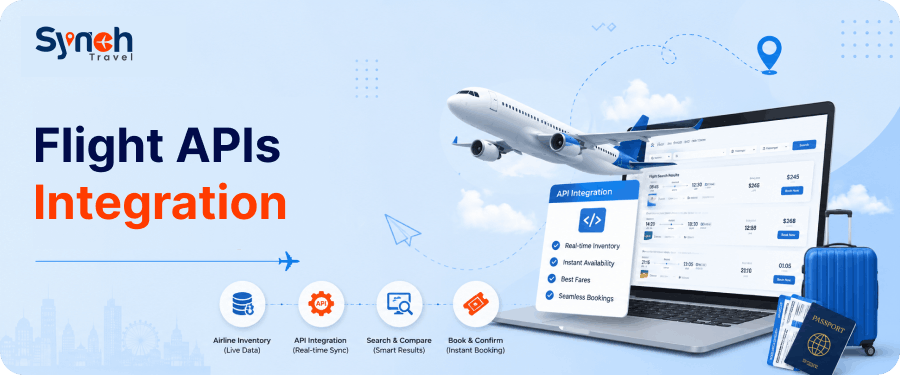
With SynchTravel's flight API integration, travel businesses can connect supported flight sources to their booking platforms, bringing flight search, availability, fares, and booking capabilities into one B2B or B2C booking environment.
The journey can then move from search → selection → passenger details → reservation → confirmation through a connected workflow.
But what happens behind that journey? Let's follow the complete process and see how SynchTravel brings flight inventory from connected sources to the final booking.
What Is Flight API Integration and How Does It Work?
A flight API for travel agencies acts as a communication layer between your platform and an airline or flight supplier's system. It lets your platform ask a supplier "what's available?" and get a real, current answer back.
API Connection vs. Flight API Integration
An API on its own simply makes a connection possible. Flight API integration puts that connection to work by bringing schedules, fares, availability, and booking capabilities into your flight booking software, giving your team one place to search, compare, and manage bookings.
Multiple Suppliers Multiply the Value
One flight supplier gives your business access to one pool of flight inventory. Connecting multiple suppliers can expand that pool, giving your platform access to a wider mix of routes, schedules, and fare options.
That matters when the first available option isn't the right one. Your customer can choose from more alternatives based on their destination, preferred travel time, or budget.
More supplier connections mean a broader range of flight choices for your booking business.
Bring Flight Inventory Into One Platform
Instead of treating each airline as its own system, the Flight Inventory API brings all of it into one platform, so your team searches once and sees everything connected suppliers offer.
Why Real-Time Flight Fares and Availability Matter So Much
Flight prices can change within minutes. The option available at 9:00 AM may cost differently by 9:05, or it may no longer be available. That's why having up-to-date pricing and availability matters when searching and booking flights.
Fares That Actually Hold Up
A quote is only useful if the customer can still book it. Up-to-date fare information helps your team work with the latest pricing returned by the connected flight source.
Schedules That Reflect Reality
Flight schedules can change after they are published. Current schedule information helps your platform reflect the latest flight times provided by the connected supplier.
Cabin and Fare Options Updated as They Change
Economy, premium, and business options can change as seats are booked. SynchTravel brings availability information from connected flight sources into the booking workflow, helping your platform present the options currently returned through those connections.
The result? Your team isn't relying on yesterday's flight information when today's customer is ready to book.
The Complete Flight Booking Journey With Flight API Integration
The API works behind the scenes, but your customers and agents experience the result as a simple booking journey.
From the first search to the confirmed reservation, flight data integration connects the steps that turn flight inventory into an actual booking.
Search → Flight Results → Compare → Select → Passenger Details → Recheck → Book → Confirmation
1. Search for a Flight
The traveler or agent enters the journey details, such as origin, destination, travel dates, baggage requirements, and number of passengers. Your online travel booking system sends the search request through a flight search API to the connected flight sources.
2. Receive Available Flight Options
The connected flight sources return the available flights, including their schedules, prices, and current availability. Your platform then displays these options so the traveler or agent can review and compare them.
3. Compare and Select
The traveler or agent compares the available routes, schedules, and fare options, then selects the flight that best matches their requirements.
4. Enter Passenger Details
After selecting a flight, the booking flow collects the passenger information needed to proceed with the reservation.
5. Recheck Flight Details
Before submitting the booking, the platform can recheck the relevant fare and availability with the connected supplier, helping account for changes that may have occurred during the booking process.
6. Submit the Booking
Once the required details are confirmed, the booking request is sent through the integrated flight reservation API to the connected flight source for reservation.
7. Receive Booking Confirmation
After the supplier confirms the reservation, the relevant booking information and confirmation status are returned to your platform.
8. Deliver the E-Ticket
For supported booking workflows, the e-ticket or relevant travel document can then be generated and delivered to the passenger.
From the first search to the final confirmation, this connected booking process keeps every step linked from start to finish.
How Connecting Multiple Flight Suppliers Benefits Your Business
Different flight suppliers offer different inventory, routes, schedules, and fares. Connecting with more than one source can give your business a wider range of flight options to offer.
- Broader Inventory to Search: Instead of relying on a single flight source, your platform pulls from multiple providers, giving your team a wider range of routes and options to offer customers.
- More Fare Options to Compare: Different suppliers price the same routes differently. Multiple connections mean your team can compare and select the fare that actually gives the customer the best value.
- Easier to Add New Sources Later: Adding another flight supplier down the line means one more connection feeding the same platform, not a rebuilt workflow or a new system for your team to learn.
- Faster, Simpler Work for Agents: For agents, more connected suppliers translate directly into faster searches, more choices to present, and quicker bookings, without adding a single extra step to how they already work.
But having more suppliers only helps when you can manage them smoothly in one place. That's why choosing the right flight booking API integration partner matters.
What to Look for When Choosing a Flight API Integration Partner
The right partner isn't the one with the longest supplier list. It's the one your business can actually rely on day-to-day.
- Strong Inventory Coverage: Check that connected suppliers cover the routes and destinations your customers book most, not just a handful of popular ones.
- Fare Accuracy That Holds Up: Look for an integration where the fare shown during search matches what the customer is charged at booking.
- Dependable Booking Connectivity: Search is only half the job. Confirm the integration reliably completes bookings and returns confirmations without delays.
- Room to Scale: As your supplier network and booking volume grow, your flight API integration should grow with it, without needing a new system.
Ultimately, you need a partner that can keep up with the way your flight business actually works, not just connect an API and leave you to figure out the rest. That is the kind of connectivity SynchTravel is built to provide.
From Flight Connectivity to Bookings: How SynchTravel Brings It Together
Your suppliers already have the flight inventory. Your business already has the customers. The real question is how easily you can bring those two sides together.
That's where SynchTravel comes in.
With SynchTravel's flight API integration services, supported flight sources can be connected to your travel platform, bringing available flight inventory into the booking environment your business already uses.
And SynchTravel doesn't forget how different travel businesses sell. Whether you're building a B2B flight API solution for agents, a B2C flight API experience for direct travelers, or serving both, the goal is the same: make connected flight inventory available where the booking actually happens.
Your B2B agents can search and book flights for their customers through your travel web portal, while B2C travelers can search and book directly through your customer-facing platform. Behind both experiences, SynchTravel keeps the supplier connectivity working in the background.
Flight Suppliers → SynchTravel → Your Travel Platform → B2B Agents & B2C Travelers
That means your business doesn't have to build its booking experience around every supplier connection. The supplier provides the inventory, your platform provides the booking experience, and SynchTravel helps connect the two.
As your business grows, you may want to add more flight sources, serve more agents, increase direct bookings, or handle more reservations. SynchTravel is designed to help you expand that connectivity without turning your booking operation into a collection of separate supplier systems.
The goal isn't simply to give you access to flight APIs. It's to help you turn that access into a booking operation your business can actually use and grow with.
Ready to Put Your Flight Connectivity to Work?
Bring supported flight sources into your booking environment with SynchTravel flight API integration and create a more connected way to serve your agents and travelers.
Book a live demo with SynchTravel and explore how your flight-booking business can connect, sell, and grow.
FAQs
What is a flight booking API?
A flight booking API is an interface that connects a travel platform to flight suppliers, enabling the platform to search available flights, retrieve fares and availability and complete bookings.
How does a flight booking API work?
A flight booking API sends search and booking requests between your travel platform and connected flight suppliers, then returns the relevant flight and reservation information.
Can flight API integration connect multiple flight suppliers?
Yes, it can connect supported flight sources and bring their available flight inventory, fares, and schedules into one booking environment.
Can flight API integration enable direct flight bookings through a travel website?
Yes, it allows customers to search flights, view fares and availability, enter passenger details, and complete bookings directly through your website.
How does SynchTravel help with flight API integration?
SynchTravel connects supported flight sources to your travel platform, bringing flight search, fares, availability, and booking capabilities into one B2B or B2C booking environment.
Is flight API integration different for B2B and B2C travel platforms?
Yes, the core integration is similar, but B2B travel platforms let agents book for customers, while B2C platforms let travelers book directly themselves.
You Might Also Like: Hotel API Integration for Global Hotel Inventory with SynchTravel
Share Blog
Curious How SynchTravel Works in Real Time?
Explore how travel professionals are streamlining operations and growing faster with SynchTravel.
Book a Demo

