
 Synch AI
Travel API Integration for Travel Business: Connect Multiple Suppliers in One Platform
Connect multiple travel suppliers through APIs to access real-time inventory, compare rates, streamline bookings, and manage travel operations from one platform.

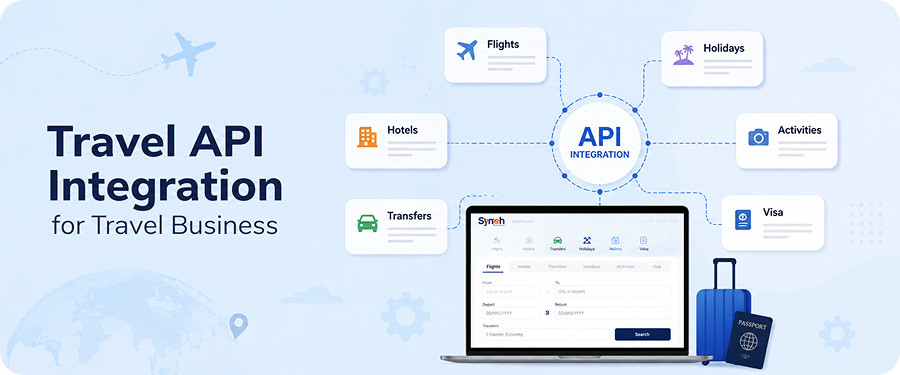
One customer. One holiday. Five different supplier systems.
To the customer, the request sounds simple: “I need a flight, a hotel, an airport transfer, and a few activities.” Behind that request, however, your travel team may be searching across different supplier portals, checking availability and prices, comparing options, and moving booking details from one system to another.
As your supplier network grows, so can the complexity of managing it. More suppliers can give your business more choice, but they can also mean more systems to work with and more manual steps between finding an option and completing a booking.
This is where travel API integration becomes important.
By connecting supplier APIs to your travel platform, your business can communicate with different travel providers and use the information and booking functions they make available through those connections. Instead of treating every supplier as an isolated source, the connected information can become part of your wider travel workflow.
For travel businesses working with flights, hotels, transfers, excursions, and packages, travel API integration can provide a more connected way to access supplier inventory and support everyday travel operations.
SynchTravel brings supported supplier APIs into its travel management platform, giving travel businesses access to connected travel inventory within the same environment.
But how does this connection actually work? And how can multiple supplier APIs operate within the same travel platform? Let's start with the basics of travel API integration.
Travel API Integration Explained: How Does It Work?
A travel API is a communication interface that allows one software system to exchange information or perform supported actions with another system. Think of it as a bridge between your travel platform and an external supplier.
However, having an API doesn't automatically connect a supplier to your platform. Your platform needs to integrate with that API so it can send requests, receive the supplier's responses, and use the available information or functions within your system.
That is what travel API integration does. It connects a supplier's API to your travel platform, allowing the two systems to communicate as part of the travel booking process.
The basic flow is:
Agent Searches → Platform Sends API Request → Supplier Returns Rates & Availability → Options Shown → Agent Selects → Booking Request → Supplier Confirmation
Depending on the supplier, the API may support functions such as search, availability, pricing, booking, confirmation, and cancellation. The exact capabilities depend on what the supplier makes available through its API.
How Do Multiple Travel APIs Work Together in One Platform?
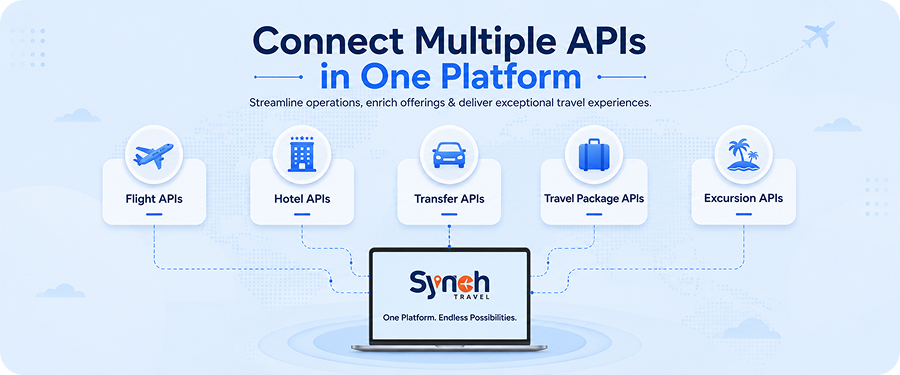
A travel business doesn't necessarily need just one API. Different suppliers may offer different travel services, so a platform can run multiple travel supplier API integrations within the same environment.
For example, a platform might connect a hotel provider through one API, a flight provider through another, and a transfer provider through a third API. Each API communicates with its respective supplier system, while the travel platform brings the information returned by these connections into one environment.
Flight APIs
A flight API can connect a travel platform to a flight data or booking provider to retrieve relevant information, such as flight schedules, fares, and availability. Depending on the provider, it may also support booking and other flight-related operations.
Hotel APIs
A hotel API can provide access to supported hotel content, including properties, room information, rates, and availability. APIs that support booking can also allow the connected platform to send reservation requests to the relevant provider.
Transfer APIs
A transfer API can connect a platform with providers of airport transfers and other ground transportation. Depending on the integration, businesses may retrieve transfer options, availability, pricing, and booking information.
Excursion APIs
An excursion API can connect travel businesses with tours, activities, attractions, and other experiences. This can enable supported activity information and booking capabilities to be integrated into the travel platform.
Travel Package APIs
A travel package API can provide access to package-related travel products where the provider supports them. This can help businesses incorporate package availability, pricing, and booking capabilities into their connected travel workflows.
Benefits of Connecting Multiple Suppliers Through APIs
Working with multiple suppliers can give your travel business a real advantage. You get more options to offer customers, more rates to consider, and less time spent jumping between supplier systems.
- More Travel Options to Sell: Different suppliers can give you access to different flights, hotels, transfers, excursions, and packages. That makes it easier to find something that actually fits what your customer is looking for.
- Better Rates Through Supplier Choice: When more than one supplier offers the same or similar travel service, you can compare the available rates and choose the one that gives your customer better value.
- Up-to-Date Availability and Pricing: Instead of relying on manually updated information, your platform can request the latest availability and pricing made available through each supplier's API.
- Faster Responses to Customers: When supplier information is available through connected APIs, your team can find suitable options without repeatedly checking different supplier portals. That means less waiting and faster responses to customer requests.
- Less Copying and Re-entering Information: Supplier APIs can send travel data directly to your platform, reducing the amount of information your team needs to copy from one system to another. This can save time and reduce manual errors.
- Scale Your Supplier Network: Your supplier network doesn't have to stay the same. As your business needs change, you can add new API connections to bring in more destinations, services, and travel inventory.
How to Choose the Right Travel API Integration for Your Business?
The right travel API integration platform should do more than connect your business with suppliers. It should make those connections useful across the way you search, sell, and manage travel.
When evaluating an integration platform, consider:
- Travel inventory: Look for the flights, hotels, transfers, excursions, and package services your business needs.
- API functionality: Check whether it supports the operations you require, such as search, availability, pricing, booking, or cancellation. If booking is important to your business, make sure the travel booking API integration supports the suppliers you plan to connect.
- Booking workflow: Make sure supplier data can move naturally through your quotation, package creation, and booking processes.
- Scalability: Choose an integration that can accommodate more suppliers, travel products, and sales channels as your business grows.
- B2B and B2C compatibility: If your business serves both travel agents and direct customers, consider whether the integration can support both sales channels.
- Reliability: Consider how supplier updates, API changes, errors, and ongoing maintenance will be handled.
But choosing the right integration is only part of the decision. What matters just as much is what happens after those supplier connections are in place and how easily your team can use them in everyday work.
To see how this works in practice, let's look at how SynchTravel brings these supplier connections together.
How Does SynchTravel Bring Travel API Integration Into One Platform?
With SynchTravel API integration services, you can connect your supplier APIs for flights, hotels, transfers, excursions, and packages to the SynchTravel platform.
Once connected, SynchTravel receives the travel data returned by your suppliers and makes it available within the platform. Your team can access supplier inventory, check rates and availability, and work with the options returned by different suppliers.
If more than one supplier offers the same or similar service, SynchTravel lets your team compare options and rates before choosing what best fits the customer's destination, dates, preferences, and budget.
From there, you can use the selected inventory in SynchTravel's quotation and package creation tools. Instead of taking supplier information and manually turning it into a customer proposal, your team can use the connected inventory while creating the travel options you want to present.
In short, SynchTravel takes your supplier API connections and puts the data they return to work, helping your team access inventory, compare supplier options, and build travel quotations and packages from one place.
Customer/Agent → SynchTravel → Supplier APIs → Multiple Suppliers → Inventory & Rates → Compare Options → Quotation/Package → Booking
Connect Your Travel Suppliers With SynchTravel
Already have your own supplier APIs? You don't have to replace them.
SynchTravel can integrate your existing supplier API connections alongside its supported APIs, so you can keep the supplier relationships and travel sources your business already relies on while adding new ones.
This means you can build on your existing setup instead of replacing it, giving your business more flexibility as your supplier needs grow.
Turn Your Supplier APIs Into More Travel Opportunities
Give your team more inventory to work with, more rates to compare, and more ways to create the right travel options for your customers.
See how SynchTravel can support your supplier network and help you get more from your API connections.
Explore SynchTravel With a Live Demo
FAQs
What is travel API integration?
Travel API integration connects a travel platform with external suppliers so the platform can exchange travel information and use available supplier functions.
How does a travel API work?
A travel platform sends a request through an API; the connected supplier processes it, and the API returns the information or response available from that supplier.
What travel inventory can supplier APIs provide?
Depending on the supplier, businesses can access inventory such as flights, hotels, transfers, excursions, and travel packages through their API integrations.
Can I connect my existing supplier APIs with SynchTravel?
Yes, SynchTravel can combine your existing supplier API connections with its supported APIs, giving you more inventory to compare & find competitive rates.
What should a travel business consider before integrating an API?
Consider the supplier's services, API capabilities, data requirements, booking functions, reliability, security, maintenance needs, and how well the integration fits your workflow.
How many supplier APIs can a travel platform integrate?
It depends on the platform and supplier requirements. SynchTravel can integrate as many supplier APIs as your business needs, provided the APIs meet the required technical specifications.
Share Blog
Curious How SynchTravel Works in Real Time?
Explore how travel professionals are streamlining operations and growing faster with SynchTravel.
Book a Demo

