
 Synch AI
Travel Technology in 2026: Key Trends Driving Innovation and Growth
Explore the latest travel technology innovations in 2026 and see how AI, automation, APIs, and cloud solutions help travel businesses streamline operations and scale

Have you noticed that running a travel business today feels completely different from just a few years ago?
It's not because people are traveling more. It's because they're expecting more.
In 2026, travelers do not want to wait hours for a quote, compare out-of-date prices, or chase booking updates. From their first inquiry, they expect instant responses, personalized recommendations, real-time availability, seamless bookings, and a smooth digital experience.
Now think about what it takes to deliver that experience behind the scenes.
Every inquiry, supplier update, booking, payment, itinerary, and customer request has to move quickly and accurately. For travel agencies, OTAs, DMCs, tour operators, and travel management companies, managing all of this while continuing to grow can become increasingly complex.
As your business expands, relying on manual processes or disconnected systems can slow down operations, increase errors, and make scaling harder. What once helped you run your business can eventually become the biggest obstacle to growth.
That's why travel technology has shifted from being a competitive advantage to becoming a business necessity. Modern travel businesses are investing in smarter solutions that automate routine work, connect suppliers in real time, simplify operations, and give teams more time to focus on customers instead of managing processes.
In this guide, we'll look at the travel technology trends shaping 2026, why they're important, and how the right technology can help your travel company run more efficiently, provide better customer experiences, and grow with confidence.
Why Travel Technology Matters More Than Ever
The last few years have seen a massive change in how people research, book, and experience travel. Today’s travelers expect speed, convenience, and personalized experiences from their initial inquiry. If they can't get quick answers or accurate information, they will often be gone to another provider in minutes.
For travel businesses, this shift has presented both an opportunity and a challenge. Digital channels are generating more inquiries than ever, but they also require faster responses, better organization and greater operational efficiency. Spreadsheets, emails and disconnected systems can’t keep up anymore.
Modern travel business technology helps agencies automate repetitive tasks, centralize operations, improve customer communication, and make better decisions using real-time data. Platforms such as SynchTravel are helping travel agencies achieve exactly that by bringing CRM, bookings, quotations, supplier management, and automation together into one connected ecosystem, making growth far easier to manage.
The Evolution of Travel Technology
Travel technology has come a long way from paper files, phone bookings, and manual record-keeping. As online travel platforms expanded and customer expectations evolved, businesses gradually moved towards digital systems that simplified bookings and improved accessibility.
Today, that evolution has reached another level. Instead of using separate software for different tasks, travel businesses are investing in integrated travel industry technology that combines automation, live data, CRM, supplier connectivity, and business insights into one solution. The result is faster operations, better customer experiences, and smarter decision-making powered by real-time information.
Travel Technology Trends Transforming the Industry in 2026
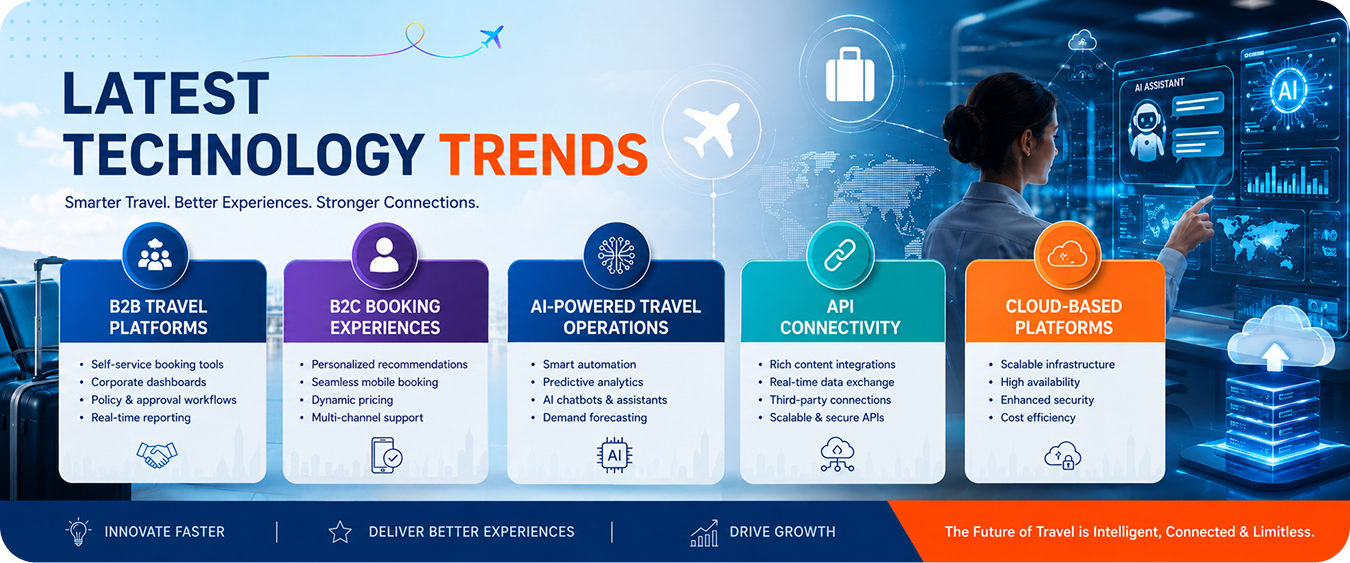
Travel technology is evolving at a faster rate than ever before, and businesses that embrace innovation today will be better prepared to meet future customer expectations. From artificial intelligence and automation to cloud platforms and real-time connectivity, these trends are assisting travel companies in increasing efficiency, reducing manual labor, and providing more personalized experiences. Here are the technologies that will shape the future of the travel industry.
AI-Powered Travel Operations Are Becoming Standard
Artificial intelligence is evolving from a novel concept to a critical component of modern travel operations. Businesses use AI to reduce repetitive tasks, improve customer interactions, and make faster decisions based on real-time data.
AI-powered solutions assist travel companies in automating customer support, improving lead management, creating personalized recommendations, and simplifying itinerary planning. Rather than replacing travel professionals, AI enables teams to concentrate on customer relationships while technology handles time-consuming tasks.
- Instant Customer Support: AI-powered chat answers common questions across the clock, so no lead waits until Monday morning.
- Smarter Lead Management: Automated scoring and follow-up reminders make sure promising inquiries never slip through the cracks.
- Faster Itinerary Creation: Automated itinerary building turns hours of research into a polished, ready-to-share plan in minutes.
- Predictive Business Insights: Data-driven forecasts reveal which destinations, packages, and customers will drive your next wave of growth.
Automation Is Reducing Operational Complexity
As travel businesses expand, managing daily tasks becomes more difficult. Quotations, confirmations, customer updates, and internal workflows can take up valuable time and cause unnecessary delays.
Travel automation enables businesses to streamline these processes by reducing repetitive work and creating more efficient workflows. This enables teams to handle larger numbers of inquiries and bookings while maintaining service quality.
- Automated Quotations: Generate accurate, professional quotes in seconds instead of building each one by hand.
- Seamless Workflow Automation: Move every booking from inquiry to confirmation automatically, with no dropped steps along the way.
- Effortless Task Management: Assign and track team tasks without wrestling with endless spreadsheets or sticky notes.
- Instant Booking Confirmations: Send consistent, on-brand confirmations the moment a booking is made.
- Timely Customer Communications: Trigger updates and reminders automatically, so travelers always feel informed and cared for.
Unified Travel Management Platforms Are Replacing Multiple Tools
How many separate systems does your business juggle right now? A booking tool here, a CRM there, a spreadsheet for pricing, and yet another app for suppliers. When your data lives in ten different places, nothing syncs cleanly, mistakes creep in, and you never see the full picture. Integrated travel management platforms bring essential business functions together, allowing teams to manage operations from one connected environment.
- Centralized CRM: Track every customer relationship in one place, so nothing about a client gets lost.
- All-in-One Booking Management: Handle flights, hotels, transfers, and activities from a single, tidy dashboard.
- Connected Supplier Management: Keep every partner relationship centralized instead of scattered across inboxes and portals.
- Clear Reporting: Get real insight into performance without stitching numbers together by hand.
- Smooth Accounting Integration: Keep your finances aligned automatically, cutting hours of manual reconciliation.
API Connectivity Is Powering Real-Time Travel Services
Customers expect live availability and accurate prices — not a "let me check and get back to you." Travel API integration connects your system directly to multiple global suppliers, giving you and your customers real-time inventory, live pricing, and instant booking services all from one place. You sell with total confidence and never oversell.
- Flight APIs: Pull live schedules, seat availability, and up-to-the-minute fares straight from airlines.
- Hotel APIs: Access real-time room availability and rates from bedbanks and global suppliers.
- Transfer APIs: Add airport pickups and ground transport directly into a booking for a complete journey.
- Activity and Tour APIs: Bring sightseeing and excursions into your inventory to build richer, higher-value packages.
Personalization Through Data and Customer Insights
By using customer insights effectively, businesses can create more relevant offers, improve communication, and build stronger relationships with travelers. A connected travel technology platform allows companies to understand customer behavior, identify preferences, and deliver personalized experiences at the right time.
- Preference-Based Offers: Match each customer with trips they actually want, so your promotions feel helpful, not spammy.
- Travel History Insights: Anticipate what a client wants next based on where and how they've traveled before.
- Targeted Campaigns: Boost open rates, clicks, and bookings by sending the right message to the right person.
- Stronger Customer Retention: Keep clients coming back, which costs far less than chasing new ones.
B2B Travel Platforms Continue to Expand
The B2B travel market continues to expand as businesses strengthen their relationships with agents and partners. To manage these networks efficiently, technology that allows for collaboration, control, and scalability is required.
Modern B2B travel platforms help businesses manage partner relationships, commissions, supplier access, and bookings through a connected system.
- Growing Agent Networks: Expand your distribution far beyond your own team's daily capacity.
- Automated Commission Management: Automate markup, commission, and payout calculations to simplify partner management and reduce manual errors.
- Global Supplier Access: Connect agents with worldwide travel inventory through one shared system, making it easier to find, compare, and manage travel products in one place.
The Growth of Self-Service B2C Booking Experiences
B2C booking engine turns your website into a 24/7 sales channel that never sleeps, where travelers can search, compare, and confirm trips without waiting for anyone. Because both the B2B and B2C channels operate within the same connected system, every sale is recorded in the same dashboard, eliminating double entry, confusion, and revenue loss.
- One-Click Online Bookings: Let customers complete a booking in seconds without waiting for anyone.
- Mobile-First Planning: Deliver a flawless browsing and booking experience on every phone.
- Self-Service Customer Portals: Give travelers a space to manage their trips and details on their own.
- Instant Confirmations: Confirm bookings the moment payment is received, fostering immediate trust.
- Secure Digital Payments: Make paying easy and safe, so fewer carts are abandoned.
Mobile-First Travel Experiences
Mobile devices have become the primary means of travel research and booking. Customers expect websites and booking platforms to function seamlessly across all devices, whether they are searching for destinations or managing existing trips.
Businesses are focusing on mobile-first experiences to improve accessibility, increase engagement, and create more convenient customer journeys.
- Rising Mobile Bookings: Capture the growing share of travelers who research and book entirely on mobile.
- Fully Responsive Design: Deliver a smooth experience that feels just as polished on a phone as on a desktop.
- Mobile Customer Support: Answer questions instantly through chat right when travelers need help.
On-the-Go Management: Let your team handle bookings and respond to clients from anywhere, not just the office.
Data Security and Compliance in Travel Technology
When customers hand you their passport details, payment information, and travel plans, they're placing real trust in your business. The technology builds security into every layer of the platform, from encrypted data handling and role-based access controls to compliant payment processing, so you can protect your customers and your reputation at the same time.
- Robust Customer Data Protection: Lock down sensitive information with encryption and role-based access controls.
- Secure Payment Processing: Give travelers the confidence to complete bookings without a second thought.
- Compliance Built In: Comply with industry standards to stay protected and audit-ready as rules change.
- Stronger Business Trust: Make responsible data handling one of the reasons customers keep coming back to you.
Cloud-Based Travel Software Is Driving Scalability
Cloud-based platforms provide flexibility, remote access, easier collaboration, and reduced infrastructure challenges, while strong security practices help protect sensitive customer information.
- Anywhere Remote Access: Work from any location with an internet connection, no office required.
- Real-Time Collaboration: Let your whole team work together on the same system at the same moment.
- Built-In Business Continuity: Keep your travel data secure with reliable cloud backups, helping your business stay protected against data loss and unexpected disruptions.
- Lower Infrastructure Costs: Reduce the need for expensive hardware, server management, and ongoing maintenance while improving operational efficiency.
- Faster Deployment: Quickly adopt modern travel technology without lengthy setup processes, allowing your business to start improving operations and serving customers sooner.
The future of travel will be shaped by businesses that can successfully adopt these technologies and bring them together into one connected ecosystem. Built around this changing landscape, SynchTravel brings the latest travel technology innovations together in one intelligent platform, helping businesses move towards smarter, more connected, and more efficient operations.
Turn Today's Trends into Tomorrow's Growth with SynchTravel
By now, one thing should be clear: the future of the travel industry isn't about adopting more technology, it's about adopting the right technology.
Every trend we've looked at, from AI and automation to API connectivity, cloud platforms, mobile experiences, and data-driven decision making, has one thing in common: making it easier for travel businesses to work faster, serve customers better, and grow without increasing operational complexity.
The challenge is that these capabilities deliver the greatest value when they work together, not as separate systems that create more work for your team.
That's exactly why we built SynchTravel.
We didn't create another travel software platform. We built a complete travel technology ecosystem that brings together everything a modern travel business needs to operate, sell, and grow, all in one place. So instead of spending your day following up on enquiries, rebuilding quotations, switching between supplier portals, or chasing information across different systems, your team can focus on what travel businesses do best: creating exceptional journeys, winning more bookings, and building lasting customer relationships.
Because at the end of the day, your success isn't measured by how many systems you use. It's measured by how many travelers you serve, how efficiently your team works, and how confidently your business continues to grow. If your technology can help you achieve all of that, you're not just keeping up with the future of travel, you're helping shape it.
Ready to See What Your Travel Business Could Look Like with SynchTravel?
Whether you're looking to simplify operations, automate everyday workflows, strengthen your B2B and B2C sales channels, or prepare your business for its next stage of growth, we're here to help.
Book your free SynchTravel demo today and discover how one connected platform can help you save time, serve more travelers, and grow your travel business with confidence.
Frequently Asked Questions
What are the latest travel technology trends?
Latest trends include AI automation, cloud platforms, API connectivity, personalized experiences, mobile booking, and integrated travel management systems.
How does API integration work in travel software?
API integration connects travel software with suppliers to access real-time availability, pricing, inventory, and booking information from multiple sources.
What features should travel management software include?
Travel management software should include CRM, booking management, supplier connectivity, automation, reporting, API integration, and customer communication tools.
How is AI changing the way travel businesses operate?
AI helps travel businesses automate repetitive tasks, personalize customer experiences, create faster itineraries, and make smarter decisions using data insights.
How do I know when it's time to upgrade my travel technology?
Upgrade your travel technology when manual processes, slow responses, and disconnected systems start limiting productivity, customer satisfaction, and business growth.
Share Blog
Curious How SynchTravel Works in Real Time?
Explore how travel professionals are streamlining operations and growing faster with SynchTravel.
Book a Demo

